
Losing weight isn’t about starving yourself or following the latest fad diet. Instead, it’s about creating a balanced diet chart for weight loss for both men and women that meets your nutritional needs while promoting fat loss. Men and women have slightly different requirements, but the foundation of a good diet plan remains the same: nourishing your body, maintaining a calorie deficit, and supporting long-term health.
Introduction: Why a Balanced Diet Matters for Weight Loss
A balanced diet ensures you lose fat while preserving lean muscle mass, boosting energy levels, and preventing nutrient deficiencies. Without the right nutrition, weight loss may lead to fatigue, weakened immunity, or even muscle loss. That’s why it’s crucial to follow a structured diet chart for weight loss for both men and women that emphasizes whole foods, portion control, and variety.
Understanding Weight Loss Basics
Calorie Deficit and Energy Balance
Weight loss occurs when you burn more calories than you consume. On average, a deficit of 500–750 calories per day helps most people lose 0.5–1 kg per week. But extreme calorie restriction can backfire, slowing metabolism and causing nutrient deficiencies.
Role of Macronutrients (Protein, Carbs, Fats)
- Proteins: Build and repair muscles, keep you full longer.
- Carbohydrates: Provide energy; choose complex carbs like oats, quinoa, and brown rice.
- Fats: Essential for hormones and brain health; focus on healthy fats like nuts, seeds, and olive oil.
Importance of Micronutrients and Hydration
Vitamins and minerals regulate metabolism, immunity, and energy production. Drinking 2–3 liters of water daily also supports digestion and fat metabolism.
Key Differences in Male vs Female Weight Loss Needs
Hormonal Influence on Weight Loss
Women often experience hormonal fluctuations due to menstrual cycles, pregnancy, or menopause, making weight loss slightly more challenging. Men typically have higher testosterone, which supports muscle growth and fat burning.
Metabolism and Muscle Mass Factors
Men usually have higher muscle mass, which burns more calories even at rest. Women, on the other hand, need fewer calories but should emphasize nutrient-dense foods to meet their needs without overeating.
Essential Components of a Weight Loss Diet Chart
Portion Control and Meal Timing
Eating small, frequent meals every 3–4 hours helps maintain energy and prevents binge eating.
Use the plate method: half plate vegetables, one-quarter protein, one-quarter whole grains.
Healthy Food Swaps for Everyday Meals
- Replace fried snacks with roasted nuts or fruit.
- Swap sugary drinks for lemon water or green tea.
- Use whole wheat bread instead of refined white bread.
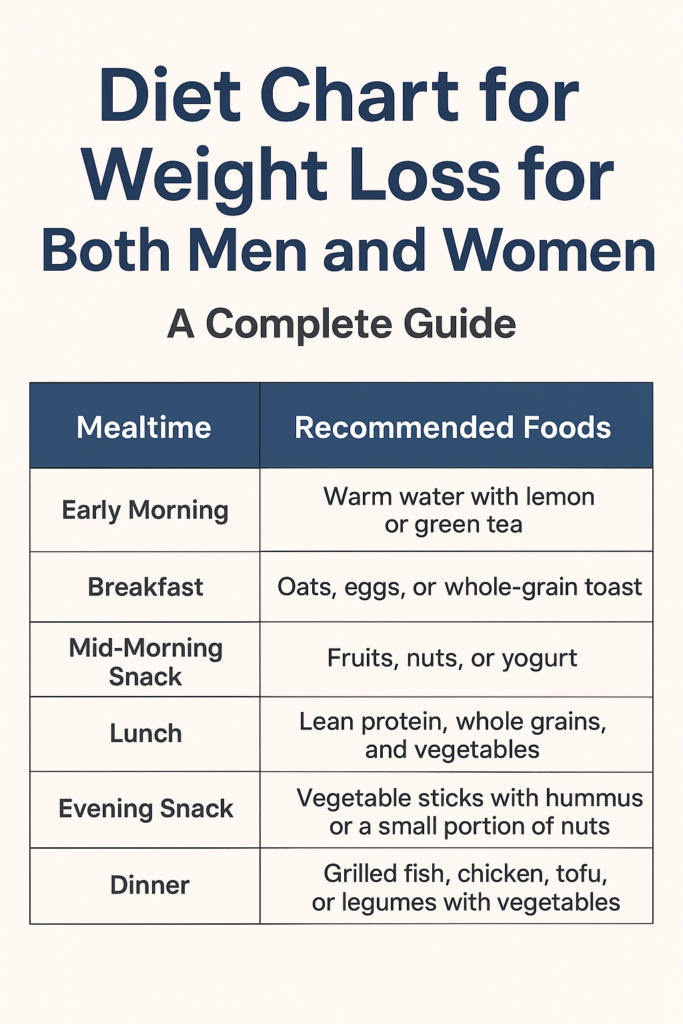
Sample Diet Chart for Men
Early Morning & Breakfast Options
- Warm water with lemon or green tea.
- Oats porridge with nuts and chia seeds.
- 2 boiled eggs or a vegetable omelet.
Mid-Morning Snacks
- Apple, banana, or papaya.
- Handful of almonds or walnuts.
Lunch Recommendations
- 1 cup brown rice or 2 chapatis.
- Grilled chicken or paneer.
- Green salad and curd.
Evening Snacks & Hydration
- Green tea or black coffee.
- Sprouts salad or roasted chickpeas.
Dinner & Bedtime Tips
- Grilled fish, tofu, or lentil soup.
- Steamed vegetables.
- Herbal tea before bed.
Sample Diet Chart for Women
Early Morning & Breakfast Choices
- Warm water with flax seeds.
- Vegetable upma or poha.
- Greek yogurt with fruits.
Mid-Morning Snacks
- Seasonal fruits or coconut water.
- Handful of pumpkin seeds.
Lunch Recommendations
- 1–2 multigrain chapatis.
- Dal or lean protein curry.
- Steamed vegetables and salad.
Evening Snacks & Hydration
- Herbal tea with roasted makhana.
- Fruit smoothie (without sugar).
Dinner & Bedtime Tips
- Vegetable soup or quinoa bowl.
- Light stir-fry with tofu.
- Warm turmeric milk at night.
Best Foods to Include for Weight Loss
Eating the right foods is just as important as cutting out the wrong ones. Here are the must-have categories in any weight loss plan:
Protein-Rich Foods
- Lean meats like chicken, turkey, and fish.
- Plant proteins such as lentils, beans, and chickpeas.
- Eggs and low-fat dairy products.
- Protein keeps you full, reduces cravings, and helps maintain muscle mass during weight loss.
Fiber-Rich Foods
- Whole grains like oats, quinoa, and brown rice.
- Vegetables such as spinach, broccoli, and carrots.
- Fruits like apples, pears, and berries.
- Fiber improves digestion and keeps you satisfied longer.
Healthy Fats & Superfoods
- Avocado, nuts, and seeds (chia, flax, pumpkin).
- Olive oil and coconut oil in moderation.
- Superfoods like green tea, turmeric, and ginger that aid metabolism.
Foods to Avoid While Following a Diet Chart
Certain foods slow down your progress and should be limited:
- Processed snacks and junk food.
- Sugary drinks, sodas, and packaged juices.
- Refined carbs like white bread, pastries, and pasta.
- Excess salt and deep-fried foods.
- Alcohol, as it adds empty calories and slows metabolism.
Role of Exercise Alongside Diet
A diet chart alone won’t give the best results unless paired with regular physical activity.
Strength Training
- Helps build lean muscle.
- Increases resting metabolism, meaning you burn more calories even at rest.
- Recommended 2–3 times per week.
Cardio & HIIT
- Brisk walking, jogging, cycling, or swimming burn calories effectively.
- High-Intensity Interval Training (HIIT) combines short bursts of intense exercise with recovery periods and boosts fat loss. Cardio Panel Test
Lifestyle Habits That Support Weight Loss
Sleep and Stress Management
Poor sleep raises hunger hormones, while stress can lead to overeating. Aim for 7–8 hours of quality sleep and manage stress with yoga, meditation, or journaling.
Consistency and Mindful Eating
Crash diets may bring quick results, but they’re rarely sustainable. Instead, focus on mindful eating—pay attention to hunger cues, eat slowly, and avoid distractions like TV or phones.
Common Mistakes to Avoid in Weight Loss Diets
- Skipping meals, which slows metabolism.
- Over-restricting calories, leading to nutrient deficiencies.
- Relying too heavily on “diet foods” instead of whole foods.
- Drinking too many liquid calories through smoothies or coffee drinks.
- Inconsistent eating and workout routines.
Expert Tips for Long-Term Weight Management
- Focus on 80/20 rule: eat healthy 80% of the time, and enjoy treats in moderation.
- Keep a food journal to track eating habits.
- Prioritize protein at every meal.
- Stay hydrated and avoid sugary drinks.
- Don’t just aim for weight loss—aim for overall lifestyle improvement.
FAQs on Diet Chart for Weight Loss for Both Men and Women
1. Can men and women follow the same diet chart for weight loss?
Yes, the foundation is similar, but men may require more calories and protein due to higher muscle mass.
2. How many meals should I eat per day to lose weight?
Eating 4–5 small meals a day works best for many people, but it depends on your lifestyle and preferences.
3. Is skipping dinner a good idea for weight loss?
No. Skipping meals often leads to overeating later. Instead, eat a light, balanced dinner.
4. How much water should I drink while on a diet?
At least 2–3 liters per day. Hydration supports metabolism and reduces cravings.
5. Can I lose weight without exercise if I follow a diet chart?
Yes, but exercise accelerates fat loss, preserves muscle, and improves overall health.
6. What’s the safest rate of weight loss?
0.5–1 kg per week is considered safe and sustainable. Faster weight loss may cause muscle loss or health issues.
Conclusion: Creating a Sustainable Path to Weight Loss
A diet chart for weight loss for both men and women should focus on balance, portion control, and consistency. While men may need more calories due to higher muscle mass, women should pay special attention to nutrient density and hormonal health. Pairing a healthy diet with regular exercise, proper sleep, and stress management ensures long-lasting results.
Remember, weight loss isn’t just about shedding kilos—it’s about adopting a healthy lifestyle that you can maintain for years. Start small, stay consistent, and the results will follow.
Tags: Diet Chart for Weight Loss