6 Effective Diet Plans for Weight Loss (With a Simple Indian Meal Plan)
6 Effective Diet Plans for Weight Loss (With a Simple Indian Meal Plan)
The best diet plan for weight loss is one you can follow for months, not days. Most healthy adults lose weight safely at about 0.5 to 1 kg per week by eating slightly fewer calories than they burn, filling half the plate with vegetables, choosing protein at every meal, and avoiding crash diets.
Searching for a diet plan for weight loss can be confusing. Some plans say skip carbs, others say skip dinner, and some promise results in three days. The truth is simpler: there is no single magic diet. What works is a plan that keeps you full, gives your body enough nutrients, and fits your culture, budget and routine. This guide explains six proven diet plans, a 7-day Indian meal plan, and the mistakes to avoid.
Why weight gain happens
Weight gain is rarely about willpower alone. Common causes include:
- Eating more calories than you burn, often from sugary drinks, fried snacks and large portions
- Sitting for long hours and low daily movement
- Poor sleep and high stress, which raise hunger hormones and cravings
- Hormonal conditions such as an underactive thyroid, PCOS or insulin resistance
- Some medicines, genetics and age-related muscle loss
Because of this, it helps to check your health before starting a diet, especially if you gain weight despite eating little.
1. The balanced plate (calorie-deficit) diet
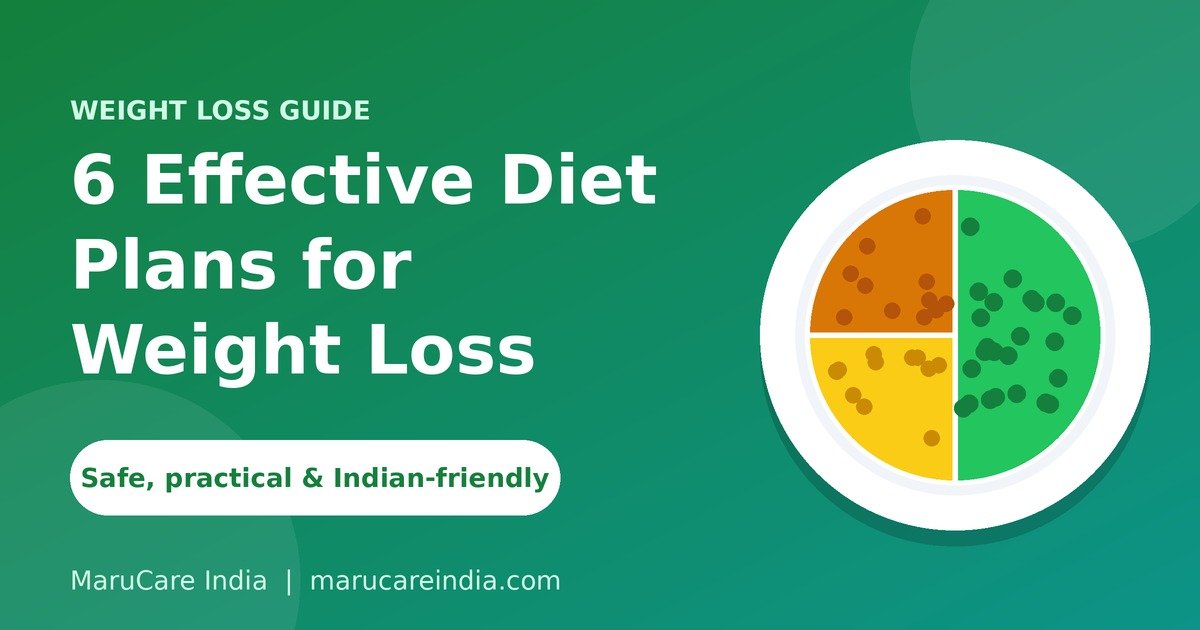
This is the best starting point for most people. You do not ban any food group. You simply control portions.
- Fill half your plate with vegetables and salad
- Fill a quarter with protein (dal, paneer, curd, eggs, fish, chicken, sprouts)
- Fill a quarter with whole grains (roti, brown rice, millets)
- Add a small portion of healthy fat such as nuts, seeds or a teaspoon of ghee or oil
Best for: beginners, families, people who want a long-term lifestyle change.
2. High-protein diet
Protein keeps you full longer, protects your muscles while you lose fat, and reduces snacking. Include a protein source at every meal: eggs, paneer, curd, dal, chana, soya, tofu, fish, chicken or low-fat milk.
Best for: people who feel hungry soon after meals, those who exercise, and adults over 40 who want to keep muscle.
Be careful if: you have kidney disease. Ask your doctor before increasing protein.
3. Mediterranean-style diet
This plan centres on vegetables, fruit, whole grains, pulses, nuts, seeds, olive oil and fish, with little processed food and sugar. It is easy to adapt in India by using dal, sabzi, salads, nuts and a moderate amount of healthy oils.
Best for: heart health, cholesterol control and sustainable weight loss.
4. Low-carb (reduced-carbohydrate) diet
Here you cut down refined carbohydrates such as white rice, maida, sugar, biscuits and sweets, and eat more protein and non-starchy vegetables. You do not need to remove carbs completely. Swapping refined carbs for whole grains, millets and vegetables is often enough.
Best for: people with sugar cravings, prediabetes or high triglycerides (under medical guidance).
Be careful if: you take diabetes medicines. Doses may need adjusting, so speak to your doctor first.
5. Intermittent fasting (time-restricted eating)
Intermittent fasting means eating all your meals within a fixed window, for example 10 hours, and fasting the rest of the day. It works mainly because it makes people eat fewer calories overall. What you eat inside the window still matters.
Best for: people who prefer fewer, larger meals and do not binge after fasting.
Not recommended for: pregnant or breastfeeding women, children and teenagers, people with diabetes on medication, and anyone with a history of eating disorders, unless advised by a doctor.
6. Plant-based or vegetarian Indian diet
A well-planned vegetarian diet can support weight loss because it is rich in fibre and lower in calories. Build meals around dal, beans, chana, rajma, tofu, paneer, curd, vegetables, fruit, nuts and whole grains.
Best for: vegetarians and vegans.
Watch out for: low vitamin B12, vitamin D, iron and protein. A blood test can show if you need supplements.
A simple 7-day Indian meal plan for weight loss
This is a sample plan for a healthy adult. Adjust portions to your hunger and activity, and consult your doctor or dietitian first.
Day 1
- Breakfast: Vegetable poha with a glass of buttermilk
- Lunch: 2 rotis, dal, sabzi, salad
- Snack: Roasted chana or an apple
- Dinner: Grilled paneer or tofu with sauteed vegetables
Day 2
- Breakfast: Moong dal chilla (2) with mint chutney
- Lunch: Brown rice, rajma, cucumber salad
- Snack: A handful of almonds
- Dinner: Vegetable soup and 1 roti with sabzi
Day 3
- Breakfast: Oats upma with vegetables
- Lunch: 2 rotis, mixed dal, bhindi sabzi, curd
- Snack: Sprouts chaat
- Dinner: Egg bhurji or paneer bhurji with salad
Day 4
- Breakfast: Besan chilla with curd
- Lunch: Vegetable pulao (small portion) with raita
- Snack: Guava or papaya
- Dinner: Grilled fish or chicken with steamed vegetables
Day 5
- Breakfast: 2 idlis with sambar
- Lunch: Jowar or bajra roti, dal, sabzi, salad
- Snack: Roasted makhana
- Dinner: Palak paneer (light) with 1 roti
Day 6
- Breakfast: Vegetable daliya (broken wheat porridge)
- Lunch: Chana masala, 2 rotis, salad
- Snack: Buttermilk and a fruit
- Dinner: Tofu or paneer tikka with mint chutney and salad
Day 7
- Breakfast: 2 boiled eggs or a paneer sandwich on whole wheat bread
- Lunch: Brown rice, dal, sabzi, curd
- Snack: Fruit with a few nuts
- Dinner: Light khichdi with vegetables
Drink 8 to 10 glasses of water daily, and limit sugary drinks, packaged juice, fried snacks and sweets.
Habits that make any diet work better
- Eat slowly and stop when about 80 percent full
- Use a smaller plate and avoid eating in front of the TV or phone
- Sleep 7 to 8 hours, since poor sleep increases cravings
- Walk 30 minutes daily and add strength training two or three days a week
- Cook at home more often and read food labels
- Weigh yourself weekly rather than daily, and track waist size too
Diet mistakes to avoid
- Crash diets and single-food diets (only fruit, only banana, only soup). They cause muscle loss, tiredness and quick weight regain
- Skipping meals, which often leads to overeating later
- Cutting out whole food groups without medical advice
- Relying on diet pills, detox teas or unproven supplements
- Expecting fast results. Slow, steady loss lasts longer
Health tests to consider before you start
If you are gaining weight easily or losing it very slowly, an underlying health issue may be involved. Useful tests include:
- Thyroid profile (TSH, T3, T4)
- HbA1c and fasting blood sugar
- Lipid profile (cholesterol and triglycerides)
- Vitamin D
- vitamin B12
- Liver function test
- kidney function tests
- Complete blood count (CBC) and haemoglobin
Know your numbers before you start your diet. Book your tests with MaruCare India and get a clear starting point for your weight loss journey.
Frequently asked questions
Q: What is the best diet plan for weight loss?
A: The best plan is a balanced, calorie-controlled diet with plenty of vegetables, protein and whole grains that you can follow long term. Individual needs differ, so a dietitian can personalise it.
Q: How much weight can I lose in a week safely?
A: Most healthy adults can safely lose about 0.5 to 1 kg per week. Faster loss often means losing muscle and water, and is hard to maintain.
Q: Can I lose weight without exercise?
A: Yes, diet changes alone can reduce weight, but exercise helps you keep muscle, improves heart health and makes the weight stay off. Even a daily 30-minute walk helps.
Q: Is intermittent fasting good for weight loss?
A: It can work for some people because it reduces total calories, but it is not better than other diets for everyone, and it is not safe for all. Check with your doctor if you have diabetes, are pregnant or take regular medicines.
Q: Why am I not losing weight even though I eat less?
A: Possible reasons include hidden calories from drinks and snacks, poor sleep, high stress, low muscle mass, or health conditions such as thyroid disorders or PCOS. A blood test and a doctor’s review can help find the cause.
Disclaimer: This article is for general information only and is not medical advice. Nutrition needs vary from person to person. Consult a qualified doctor or dietitian before starting any diet, especially if you have a medical condition, are pregnant or take regular medicines.
This article is for general information and is not a substitute for medical advice. Please talk to your doctor about your own health.